
50 Cao Duc Lan Street, Binh Trung Ward, Ho Chi Minh City, Vietnam

+84 76 865 6688

info@beetech.com.vn
+84 76 865 6688

About us
Contact us



HOME
PRODUCTS
SOLUTIONS
INDUSTRIES
PROJECTS
NEWS


50 Cao Duc Lan Street, Binh Trung Ward, Ho Chi Minh City, Vietnam
+84 76 865 6688
info@beetech.com.vn
+84 76 865 6688
About us
Contact us
HOME
PRODUCTS
SOLUTIONS
INDUSTRIES
PROJECTS
NEWS
What Is RFID? The Contactless Identification Technology Transforming How Businesses Operate
In today’s digital era, data has become one of the most valuable assets for businesses. The ability to track, control, and analyze physical assets in real time plays a decisive role in operational efficiency and competitiveness. However, traditional management methods—such as manual recording or barcode systems—are increasingly revealing their limitations: slow processing, human error, and poor scalability.
This is where RFID (Radio Frequency Identification) emerges as a foundational technology, enabling enterprises to modernize operations, automate data collection, and build a sustainable digital transformation strategy.

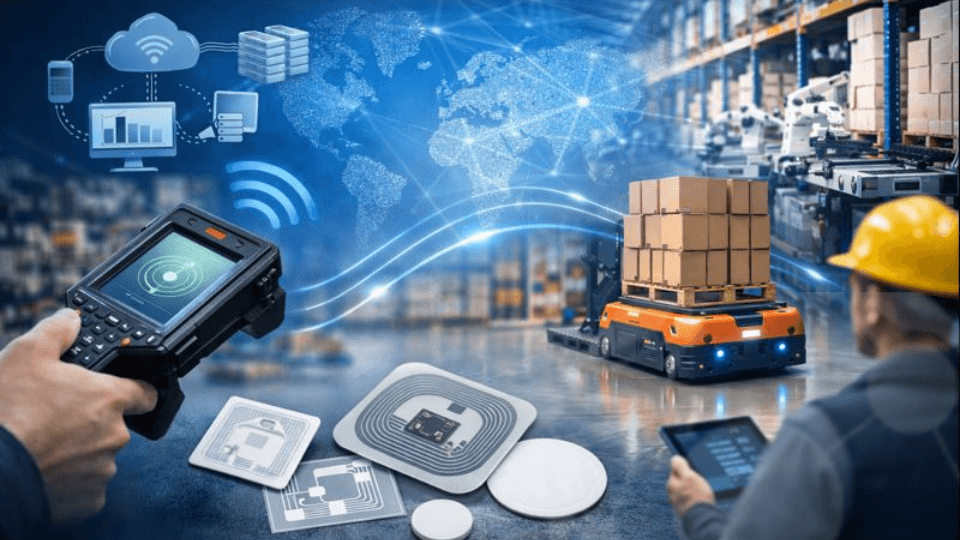
RFID (Radio Frequency Identification) is a technology that uses radio waves to identify and collect data from tagged objects automatically, without requiring direct contact or line-of-sight scanning.
Each RFID tag contains a unique identifier and can store additional data related to the product, asset, or item it is attached to. Unlike barcodes, RFID allows:
Contactless identification
Simultaneous reading of multiple items
Real-time data capture
High accuracy with minimal human intervention
As a result, RFID has become a key enabler for smart warehouses, smart factories, and data-driven enterprises.
An RFID system operates through wireless communication between tags and readers. The basic process includes:
The RFID reader emits a radio frequency signal
RFID tags receive the signal and respond with stored data
The antenna captures the response
Software processes, filters, and stores the data
This entire process takes place within milliseconds, enabling high-speed data collection even in complex environments such as large warehouses or industrial plants.
An effective RFID solution is not just about hardware—it requires a well-designed ecosystem of integrated components.
RFID tags are attached to:
Products
Pallets and cartons
Manufacturing parts
Fixed assets and equipment
Common tag types include:
Passive RFID tags – no battery, cost-effective, widely used
Active RFID tags – battery-powered, long read range
Semi-passive tags – hybrid solution
By frequency:
LF (125–134 kHz) – short range, high resistance to interference
HF (13.56 MHz / NFC) – access control, smart cards
UHF (860–960 MHz) – logistics, warehousing, manufacturing

RFID readers communicate with tags and can be deployed in multiple forms:
Fixed readers at warehouse gates or conveyor belts
Handheld readers for inventory audits
Vehicle-mounted readers (forklifts, AGVs, robots)
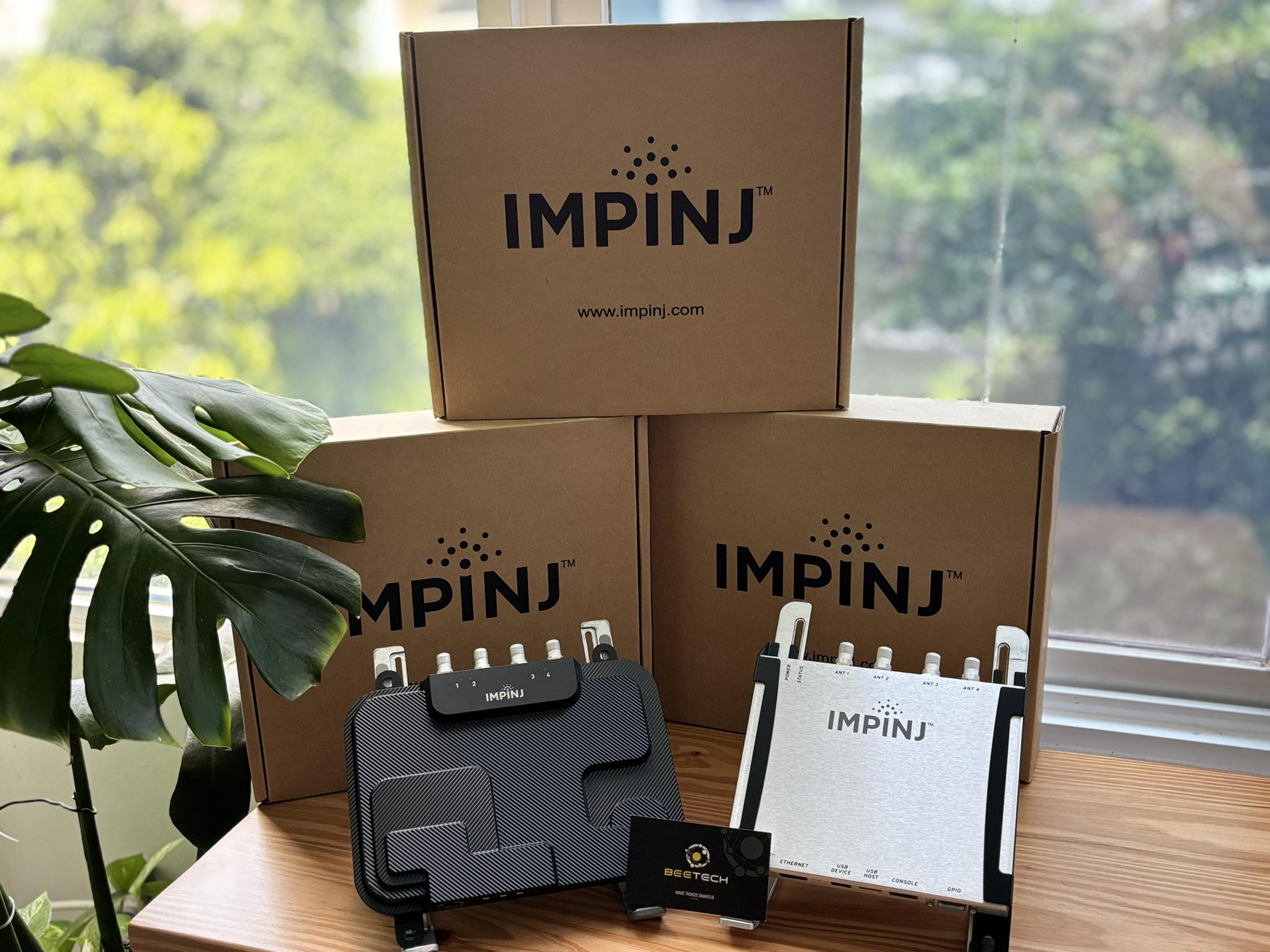
Antennas extend the read zone and ensure stable performance in challenging environments such as:
Warehouses
Industrial production lines
High-volume logistics centers
RFID software acts as the central intelligence layer, responsible for:
Collecting and filtering data
Eliminating duplicates and noise
Real-time visualization
Integrating with ERP, WMS, and MES systems
Generating reports and analytics
| Criteria | Barcode | RFID |
|---|---|---|
| Line of sight | Required | Not required |
| Reading speed | Slow | Extremely fast |
| Multiple reads | No | Yes |
| Accuracy | Operator-dependent | Automated |
| Harsh environments | Limited | Highly reliable |
These advantages make RFID a next-generation replacement for barcodes in modern enterprise systems.
RFID enables:
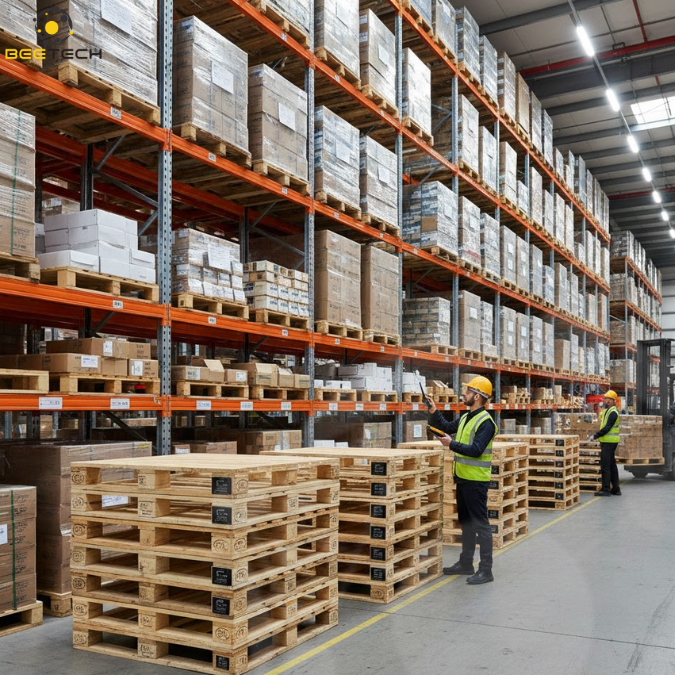
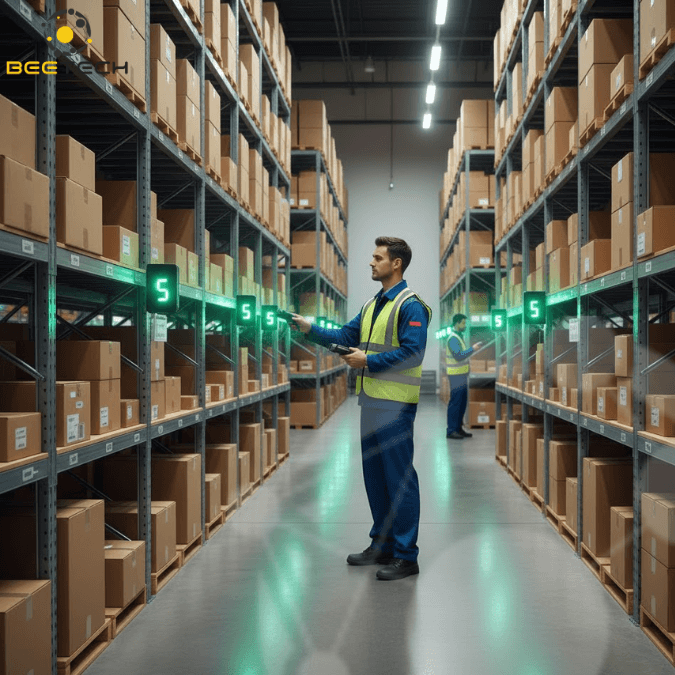
Rapid inventory counting
Real-time inbound and outbound tracking
Reduced loss and misplacement
Optimized warehouse workflows
Large warehouses can reduce inventory checking time from days to hours with RFID.
In production environments, RFID supports:
Work-in-process (WIP) tracking
Production traceability
Error reduction in assembly lines
Seamless MES and ERP integration
RFID forms the backbone of smart factory implementations.

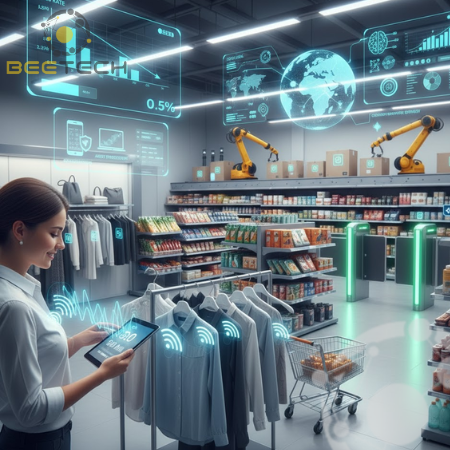
Retailers use RFID to:
Improve inventory accuracy
Prevent theft
Enable faster checkout
Enhance customer experience
RFID helps organizations:
Track asset location and usage
Manage asset lifecycle
Prevent loss or misuse
Improve audit accuracy
Widely used in hospitals, universities, and large enterprises.
RFID delivers long-term strategic value:
🚀 Increased operational efficiency
🎯 Accurate, real-time data
💰 Reduced labor and operational costs
📊 Data-driven decision-making
🔄 Scalable and future-proof systems
RFID is not just a tool—it is a digital transformation enabler.
Despite its advantages, RFID implementation presents challenges:
Initial investment cost
Environmental interference
System integration complexity
Staff training requirements
Choosing an experienced RFID solution provider is therefore critical.
In Vietnam, Beetech stands out as a trusted provider of comprehensive RFID solutions, delivering projects that focus on real operational value rather than technology alone.
Beetech delivers end-to-end RFID solutions, including:
RFID tags (UHF, HF, NFC)
Fixed and handheld RFID readers
Industrial-grade RFID antennas
Integrated devices for warehouses and factories
Customized RFID management platforms
ERP, WMS, MES integration
Real-time dashboards
Intelligent alerts and analytics
On-site surveys
Solution design based on business processes
Deployment, training, and maintenance
Deep understanding of logistics and manufacturing operations
Flexible, scalable solutions
Experienced engineering team
Long-term partnership mindset
Beetech focuses on helping businesses measure ROI, improve efficiency, and sustain growth through RFID.
RFID is ideal for:
Manufacturing enterprises
Logistics and distribution centers
Retail chains
Asset-intensive organizations
Companies pursuing digital transformation
If your business struggles with:
Slow inventory processes
Stock inaccuracies
Asset loss
Manual data handling
👉 RFID is the right solution.
RFID continues to evolve and integrate with:
Artificial Intelligence (AI)
Big Data analytics
Internet of Things (IoT)
Smart factories and smart warehouses
RFID is no longer a future concept—it is happening now.
RFID is a core technology that enables businesses to manage physical assets with the same precision as digital data. Implemented correctly, RFID optimizes operations, enhances transparency, and lays the foundation for enterprise-wide digital transformation.
With experienced solution providers like Beetech, organizations can deploy RFID strategically, efficiently, and sustainably.
👉 RFID is not just technology—it is a long-term competitive advantage.
📧 Email: info@beetech.com.vn
🌐 Website: https://beetech.com.vn

RFID – A new direction in bank document management.

28/01/2026 04:38:54
What Makes Beetech’s Asset Management Software Different from Other Solutions?
12/01/2026 03:45:27
What is RFID? Is RFID Implementation Expensive?
10/01/2026 07:38:29

RFID Tags Supplier – Ready to Supply All Types | Beetech
09/01/2026 06:54:14
National Traceability System Launch & RFID Traceability Solutions
06/01/2026 08:07:37
What Is RFID? The Contactless Identification Technology Transforming How Businesses Operate
05/01/2026 04:14:42