
50 Cao Duc Lan Street, Binh Trung Ward, Ho Chi Minh City, Vietnam

+84 76 865 6688

info@beetech.com.vn
+84 76 865 6688

About us
Contact us



HOME
PRODUCTS
SOLUTIONS
INDUSTRIES
PROJECTS
NEWS


50 Cao Duc Lan Street, Binh Trung Ward, Ho Chi Minh City, Vietnam
+84 76 865 6688
info@beetech.com.vn
+84 76 865 6688
About us
Contact us
HOME
PRODUCTS
SOLUTIONS
INDUSTRIES
PROJECTS
NEWS
RFID-Based Bank Document Management Solution
In banking operations, documents are not merely paperwork—they are assets with extremely high legal, financial, and risk value.
Credit files, loan contracts, legal documents, customer records, and internal files are all directly linked to:
Legal responsibility
Regulatory compliance
Brand reputation
Data security and confidentiality
However, in practice, many banks—even large-scale institutions—are still managing documents using traditional methods such as:
Paper-based storage
Barcode labeling
Excel files or basic document management systems
As document volumes grow to hundreds of thousands or even millions of files, these methods begin to reveal serious limitations.
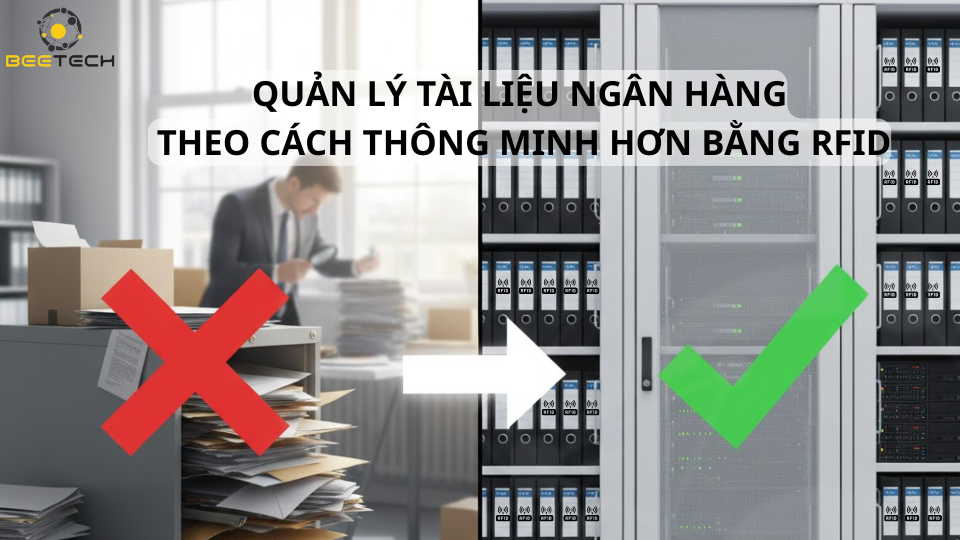
Losing just one credit file can expose a bank to:
Loan disbursement delays
Customer complaints
Audit and inspection risks
Direct damage to reputation
In many cases, documents are not permanently lost but rather “unlocatable”—no one knows where they are, who is holding them, or which departments they have passed through.
With traditional methods:
Searching for a single file takes 10–30 minutes
Document inventory can take hours or even days
Multiple staff are required, yet accuracy remains low
This significantly reduces operational efficiency and creates hidden costs.
As documents move across departments:
There is no clear borrow–return history
It is difficult to identify the last user
Accountability is unclear when issues arise
This is a major weakness in internal control for many banks.
Barcode technology was once a major step forward in document management, but it is no longer suitable for today’s banking environment because:
Each barcode must be scanned individually
The barcode must be visible to be read
Bulk inventory is not possible
Real-time location tracking is not supported
As document volumes increase, barcode systems become an operational bottleneck rather than a solution.
RFID (Radio Frequency Identification) is a wireless identification technology that enables:
Contactless identification
Simultaneous reading of multiple items
Operation in high-security environments
Each document file is equipped with an ultra-thin RFID tag that does not affect document integrity, allowing the system to automatically identify and track it.
| Criteria | Barcode | RFID |
|---|---|---|
| Line-of-sight required | Yes | No |
| Bulk reading capability | No | Yes |
| Real-time location tracking | No | Yes |
| Automated inventory | Limited | Full |
| Movement history tracking | No | Yes |
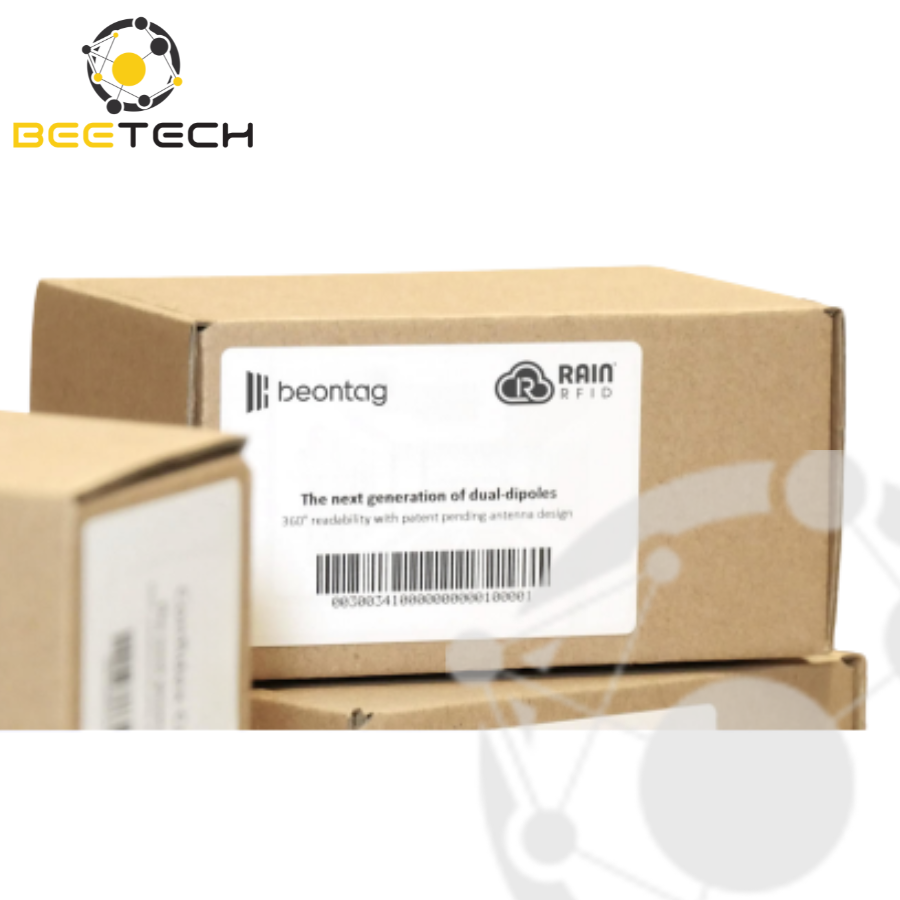
Each document file is assigned a unique RFID identifier
Tags are attached to file covers without affecting content
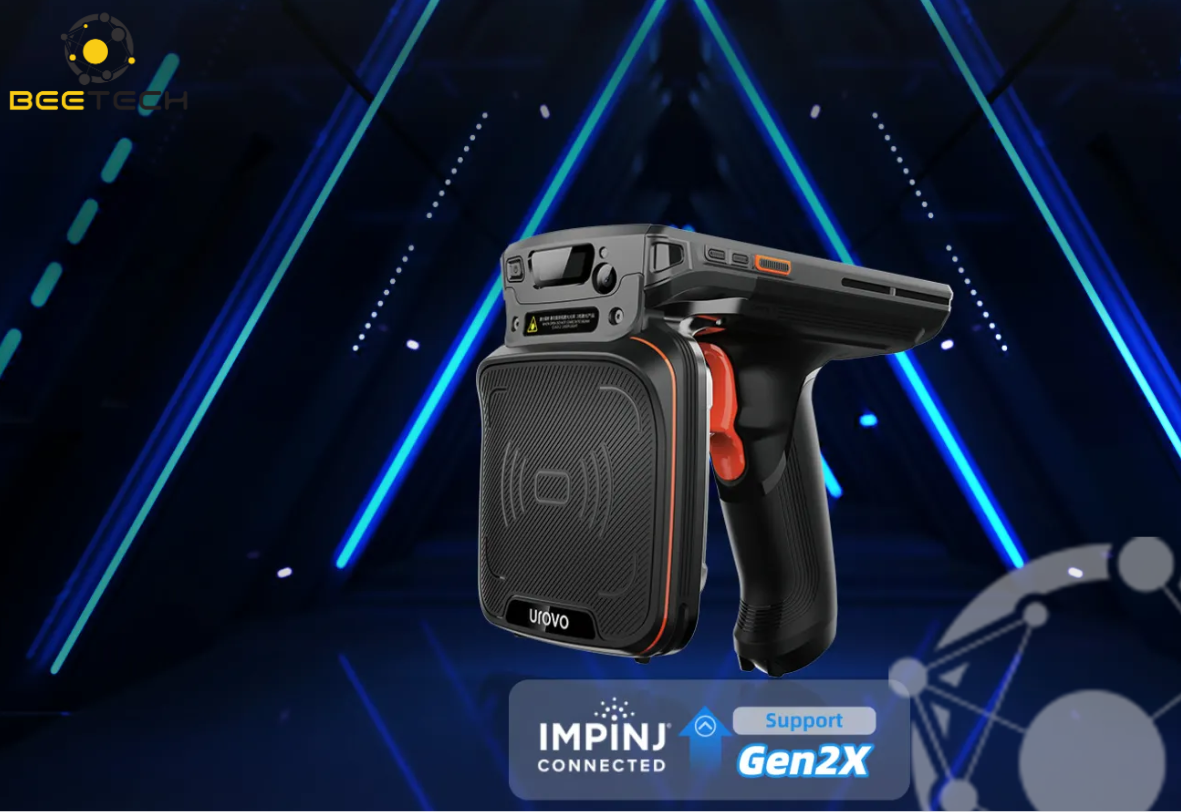
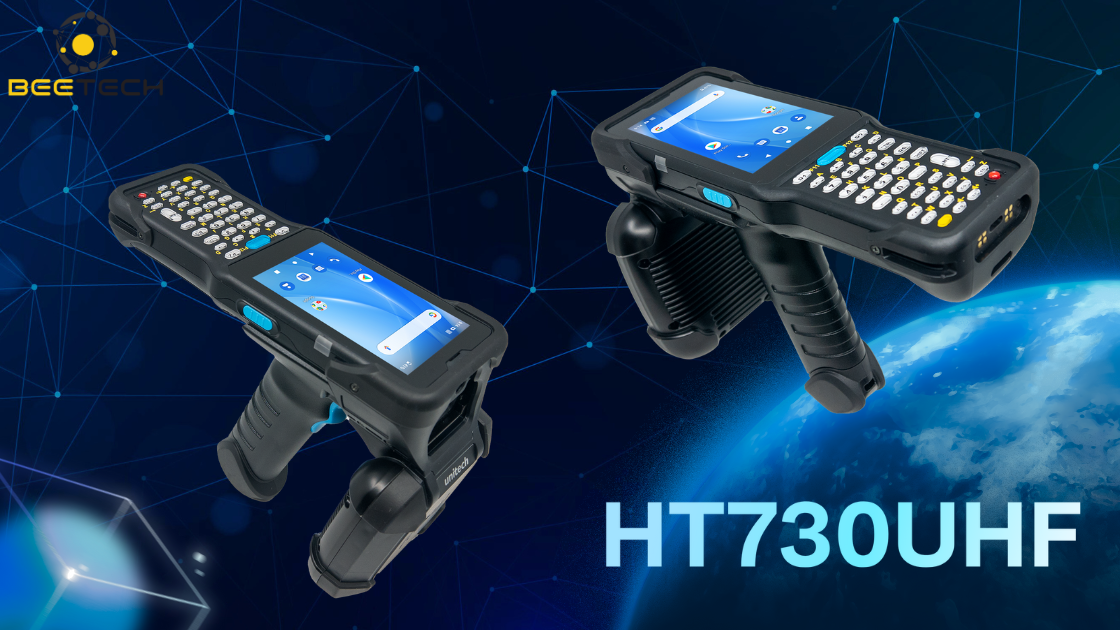
Handheld RFID readers for searching and inventory
RFID gates at archive rooms to control entry and exit
Fixed antennas installed at critical areas
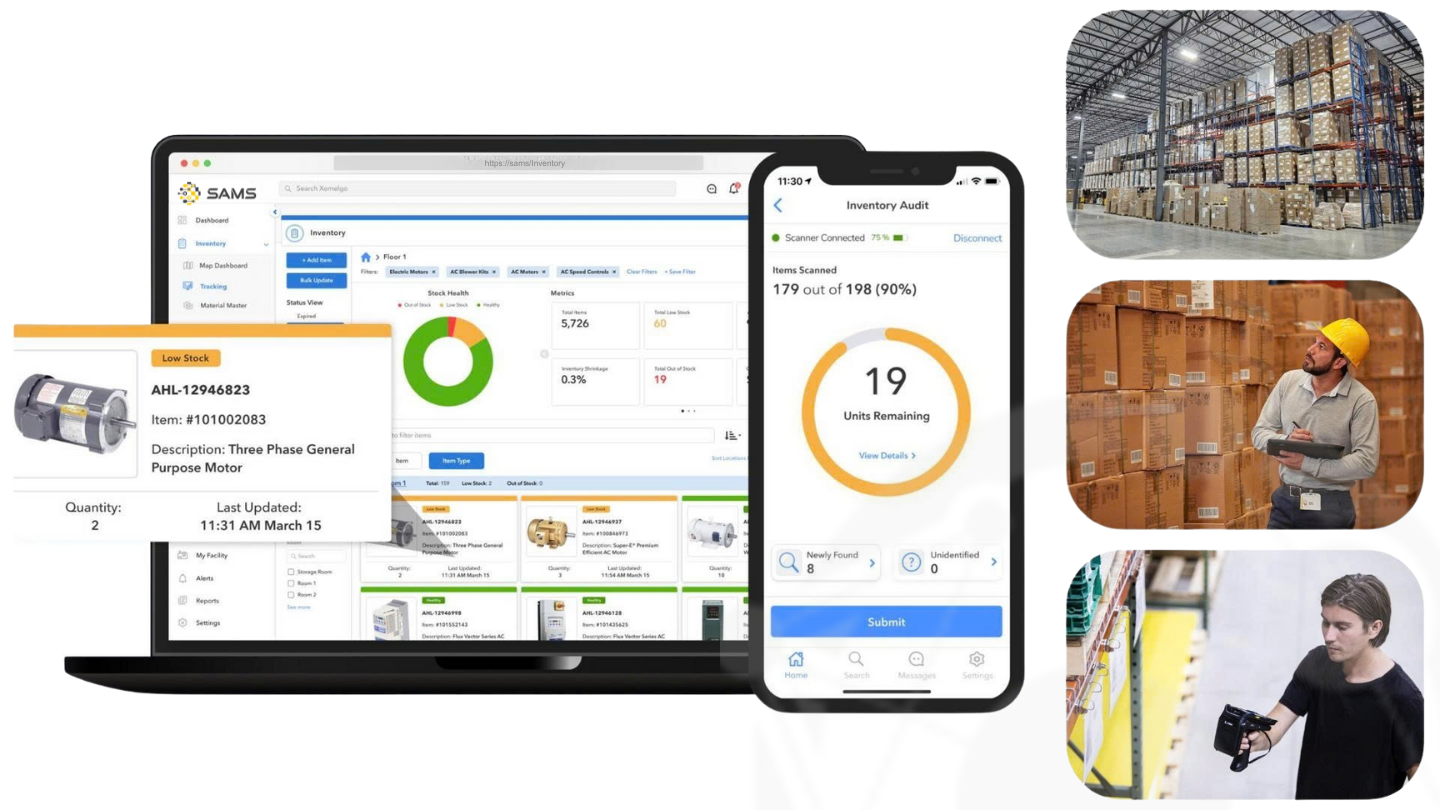
The software enables banks to:
Manage document catalogs
Track document locations in real time
Record borrow–return–movement history
Trigger alerts when documents leave authorized areas
Generate inventory, compliance, and audit reports
From 10–30 minutes → just a few seconds
Staff no longer need to search manually
Inventory of thousands of files in minutes
Accuracy exceeding 99%
Alerts are triggered if files leave authorized zones
Clear accountability and traceability
Easier audits and inspections
Transparent document movement tracking
Before RFID
File retrieval time: 15–20 minutes
Inventory discrepancy: 5–7%
Document loss: recurring
After RFID
File retrieval time: < 1 minute
Accuracy: >99%
Document loss: nearly zero
60–70% reduction in document management operating costs
RFID is a holistic solution, not just a hardware deployment.
Successful implementation requires deep understanding of:
Banking workflows
Security requirements
Internal compliance standards
Beetech is a pioneer in Auto-ID & RFID solutions in Vietnam, delivering end-to-end RFID solutions from hardware to software, including:
RFID tags, readers, and access control gates
Specialized document management software
Consulting, deployment, and system integration tailored to banking operations
Beetech does not deploy unnecessary technology—it focuses on solving real operational pain points.
By adopting RFID, banks can:
Reduce legal and compliance risks
Improve staff productivity
Strengthen control and visibility
Standardize document management as part of digital transformation
👉 As banks face increasing pressure for compliance and efficiency, RFID is no longer a trend—it is a foundational management platform.
An RFID-based bank document management solution enables banks to:
Achieve full document control
Minimize the risk of document loss
Improve operational efficiency
Meet audit, inspection, and compliance requirements
This marks a critical shift from reactive document handling to proactive, data-driven control.
📧 Email: info@beetech.com.vn
🌐 Website: https://beetech.com.vn
