
80-82 Cao Duc Lan, District 2, HCMC, Vietnam

+84 76 865 6688

info@beetech.com.vn
+84 76 865 6688

About us
Contact us



HOME
PRODUCTS
SOLUTIONS
INDUSTRIES
PROJECTS
NEWS


80-82 Cao Duc Lan, District 2, HCMC, Vietnam
+84 76 865 6688
info@beetech.com.vn
+84 76 865 6688
About us
Contact us
HOME
PRODUCTS
SOLUTIONS
INDUSTRIES
PROJECTS
NEWS
Classification of RFID Reders: Which type is right for your Business?
In an era where digital transformation is accelerating, RFID (Radio Frequency Identification) has become a core technology in warehouse management, manufacturing, retail, transportation, and traceability. With advantages far beyond traditional barcodes—such as faster data capture, long-range reading, and automated identification—RFID enables businesses to streamline operations, reduce cost, and increase accuracy to near-perfect levels.
Within any RFID system, the RFID Reader is the central component—acting as the “brain” that receives, processes, and transmits data from RFID tags to the software. However, not all companies are familiar with the different types of RFID readers, which situations they fit, or how to select the right device to optimise investment costs.
This article will help you:
Understand all types of RFID readers
Identify their advantages and limitations
Know which scenarios each type is suitable for
Evaluate key considerations before purchasing
Explore popular device models on the market
Choose the best RFID reader for your business needs
An RFID Reader is a device that transmits and receives radio-frequency signals to communicate with RFID tags and capture data. It then sends this data to management software for processing.
RFID Readers enable businesses to:
Read thousands of tags per second
Operate without line-of-sight
Scan through cartons, pallets, or sealed packaging
Track assets and inventory in real time
Reduce labour, minimise errors, and accelerate workflows
To deploy RFID effectively, businesses must first understand which type of reader fits their operational needs.
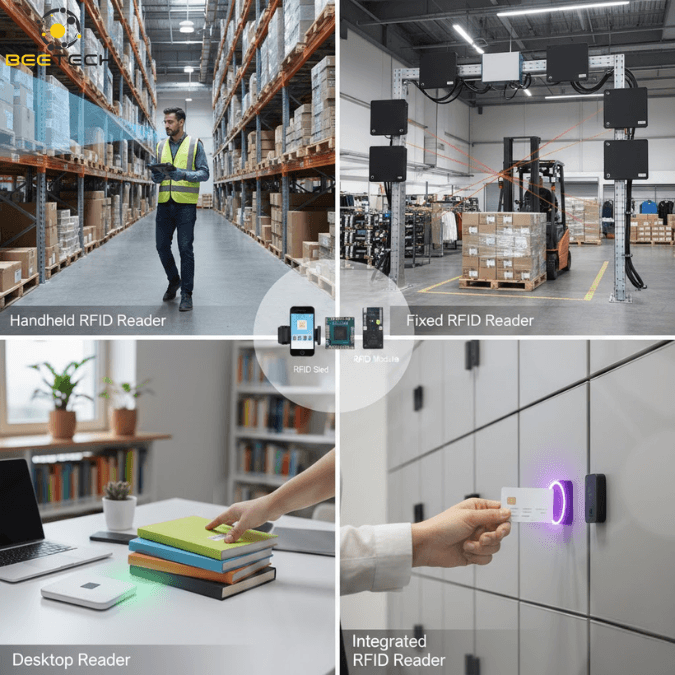
Currently, RFID readers are divided into four primary groups, each tailored for different applications:
Fixed RFID Readers
Desktop / USB RFID Readers
Integrated RFID Readers
Additionally, the market offers:
RFID Sleds (mobile attachments for smartphones)
RFID Gateways (intelligent readers with built-in CPU)
RFID Modules (for OEM embedded systems)
Below is a detailed breakdown of each type.
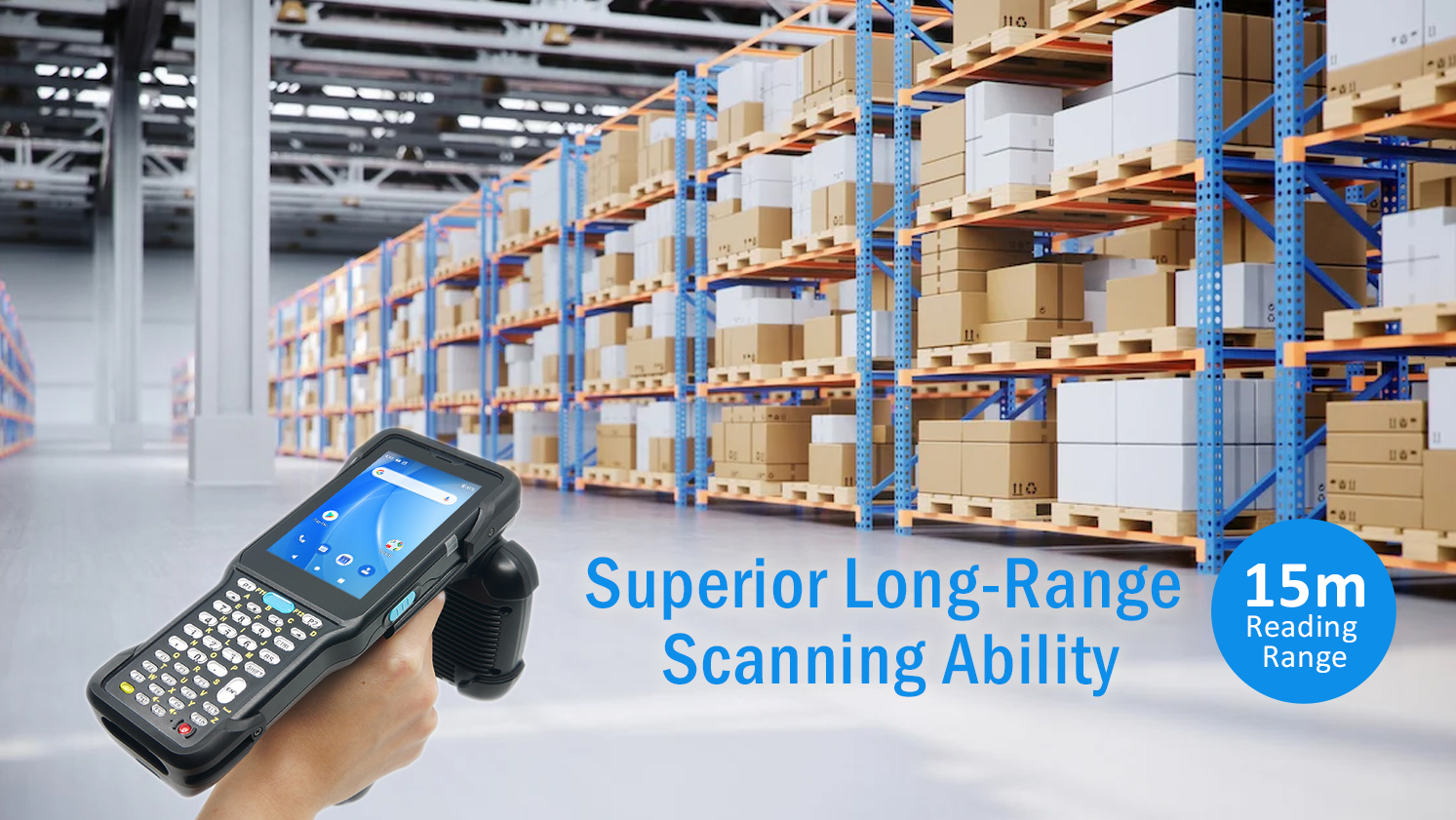
A portable, battery-powered device that allows users to scan RFID tags anywhere. Handhelds often integrate:
UHF RFID
1D/2D barcode scanning
NFC
WiFi, Bluetooth, 4G
Highly portable and flexible
Long read range (6–15m depending on antenna)
Fast scanning, ideal for inventory checks
Easy to deploy and user-friendly
No installation required
Not suitable for continuous automated reading
Dependent on manual operation
Requires daily charging
Handheld RFID Readers are ideal for:
✔ Periodic inventory counts
✔ Asset management
✔ Pallet, tote, and container scanning
✔ Distribution centre operations
✔ Event RFID check-in
✔ Tracking mobile medical equipment
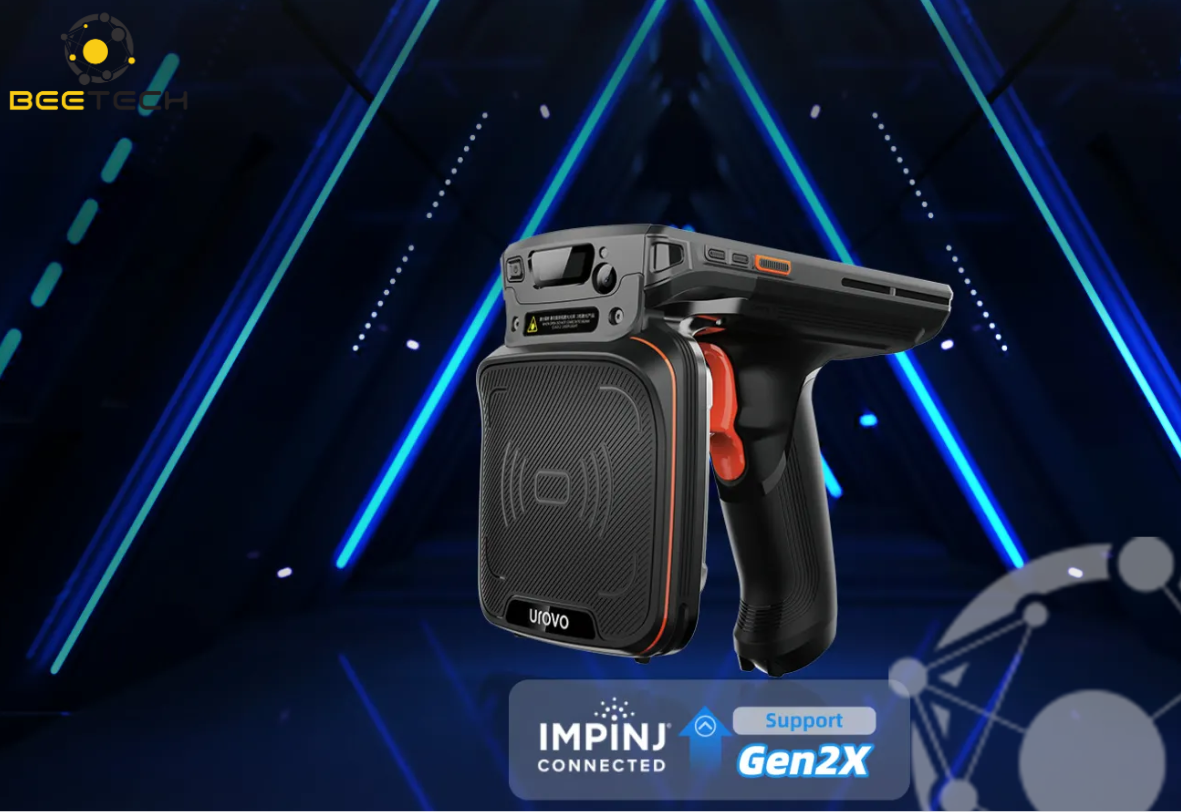
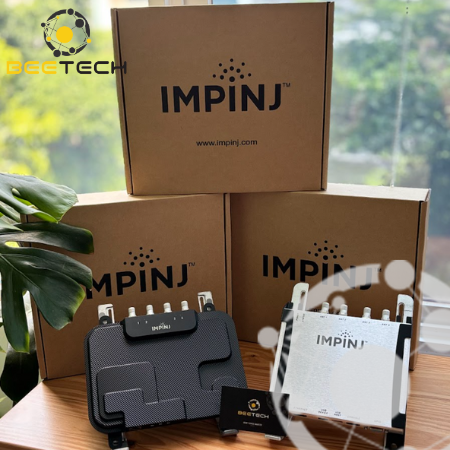
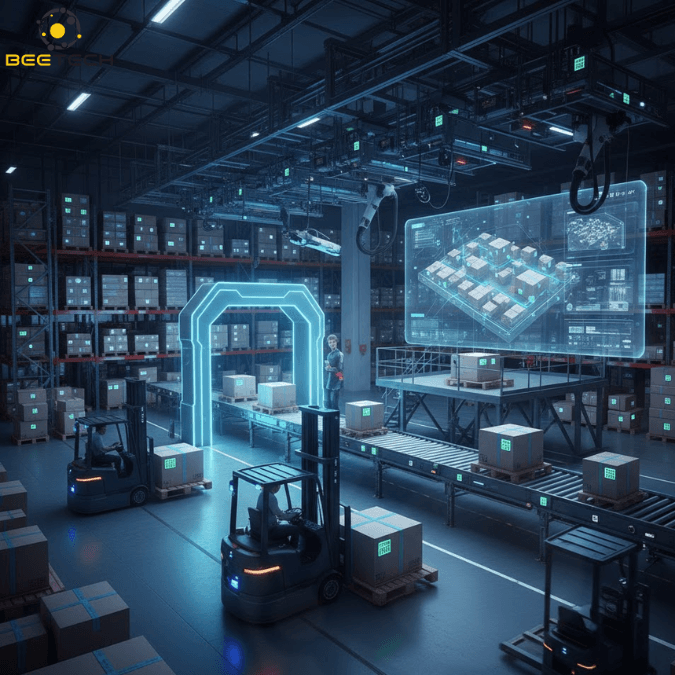
Devices installed at fixed positions such as warehouse gates, production lines, or conveyor systems. Typically paired with external antennas for broader coverage.
Extremely fast read performance
Operates 24/7
Can read thousands of tags in seconds
Easily integrates into automated processes
High stability and durability
Requires professional installation
Higher cost than handheld devices
Needs additional antennas, mounts, or portals
✔ Warehouse entry/exit gates
✔ Pallet in/out verification
✔ WIP tracking on production lines
✔ Container and forklift monitoring
✔ Conveyor belt sorting
✔ RFID security checkpoints
Compact devices connected to a computer via USB. Designed for short-range reading (10–80cm).
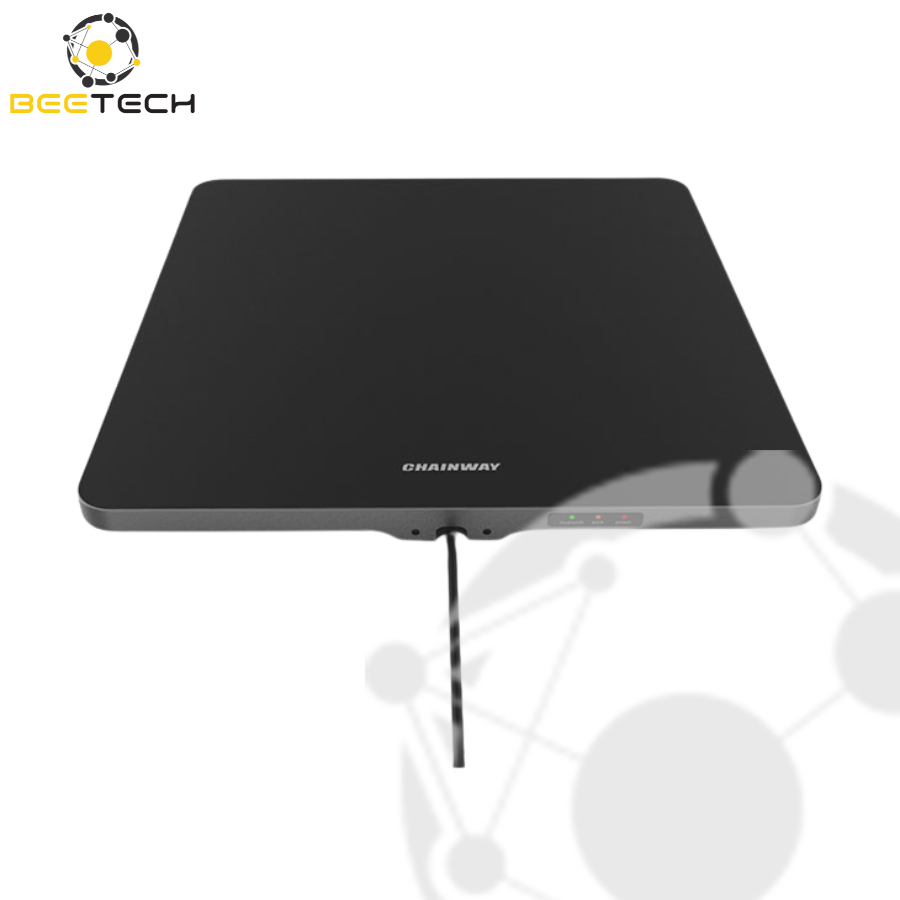
Low cost
Easy to use
Ideal for product registration or data input
Safe and controlled read range
Not suitable for long distances
Cannot replace handheld or fixed systems
✔ Retail: EPC encoding
✔ Reception counters: short-range check-ins
✔ Manufacturing: tag assignment for individual products
✔ Libraries
✔ Document and file tracking
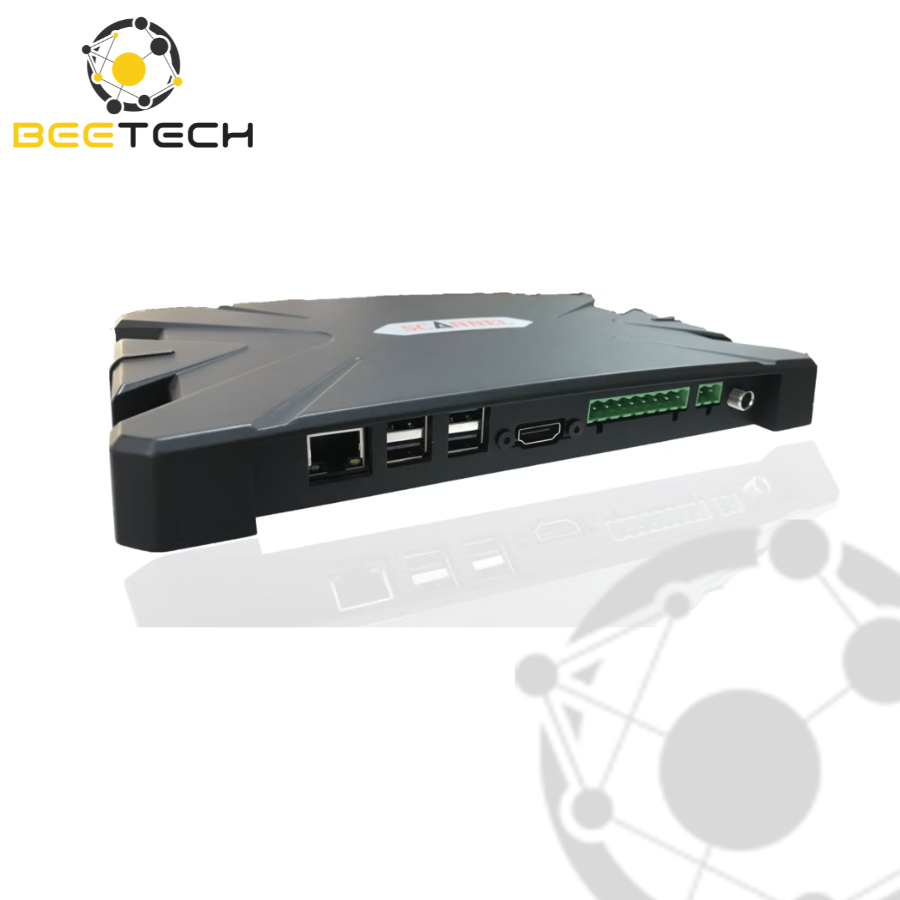
An RFID Reader with a built-in antenna, typically housed in a single, compact unit. No external antennas required.
Compact and easy to install
Good read range (3–8m)
More affordable than full fixed systems
Suitable for commercial and office environments
Not ideal for heavy industrial use
Lower power compared to fixed readers with external antennas
✔ Asset tracking
✔ Small entry/exit points
✔ Event RFID check-in
✔ Libraries and bookstores
✔ Smart lockers
Attachable readers for smartphones. Widely used by:
Retail associates
Store inventory teams
Fashion and apparel businesses
High-performance readers with built-in processors designed for:
Smart stores
Movement tracking
Zone-based asset monitoring
Embedded readers used by manufacturers to create custom RFID devices.
This is the most critical part. To make the right selection, businesses should answer the following six questions:
0–30cm → USB Reader
1–3m → Integrated Reader
6–15m → Handheld
10–20m → Fixed Reader with external antennas
Under 500 tags per cycle → Handheld
Over 1,000 tags per cycle → Fixed Reader
Manual operations → Handheld
Semi-automated → Integrated Reader
Fully automated → Fixed Reader
Office → USB / Integrated
Warehouse / yard / container area → Handheld / Fixed
Heavy industrial manufacturing → Fixed + antennas
3–10 million VND → USB Reader
10–20 million VND → Entry-level handheld
20–40 million VND → High-end handheld
40–100+ million VND → Fixed Reader with antennas
Small retail store → Handheld / USB
Retail chains → Sled + handheld
Large factories → Fixed Readers
Logistics & distribution → Fixed + RFID Gateway
Below is a quick recommendation summary:
Retail – fashion: RFID Sled + handheld
Warehousing – logistics: Handheld + Fixed Reader
Manufacturing: Fixed Reader + antennas + handheld backup
Healthcare: Integrated + Desktop
Events: Integrated + handheld
Asset tracking: Handheld + USB reader
Choosing the right RFID reader helps businesses:
Optimise investment
Improve operational efficiency
Reduce manual errors by up to 95%
Automate workflows end-to-end
Track goods and assets in real time
Beetech delivers a complete RFID ecosystem
We provide solution consulting, on-site demo, and tailored quotations for specific business use cases.
📩 Contact Beetech today for expert consultation and the most suitable RFID reader for your operation.
📧 Email: info@beetech.com.vn
🌐 Website: https://beetech.com.vn

RFID in Logistics – The Core Technology Powering Modern Supply Chains

17/11/2025 06:21:25

RFID – The “Silent” Technology Transforming How Vietnamese Businesses Manage Their Inventory
13/11/2025 07:16:17

National Assembly Proposes Using Electronic Chips to Monitor Drug Addicts
12/11/2025 03:56:38
Vietnam’s RFID Logistics Market: Rapid Growth from 2025 to 2031
12/11/2025 03:13:47

RFID – When data becomes reality: The journey to building systems of reality in the digital ge
07/11/2025 02:57:55
Challenges in RFID Reading Performance and Environmental Conditions
06/11/2025 02:36:26